We've been in Albania for almost a year but it was only over the course of this past week that I finally got out and played "tourist" here in Tirana. While we've traveled through most parts of Albania, Tirana itself has remained a mystery to me. To me the City was loud, dirty, and uninteresting. I'd like to say that it was my own curiosity that got me out and about touring Tirana's highlights but that isn't the case. Work, both my paid position at the Embassy and my unpaid responsibilities as Glenn's spouse, is what pushed me into tourist mode.
I started out the week by taking part in a walking tour of Tirana's most important cultural sites. Sponsored by the Municipality of Tirana, the tour was offered as part of the City's newly expanded tourism initiative. The tour was so new, that my party was actually the first one to take the tour. Upon hearing this, I was a bit skeptical about what the next 90 minutes would hold. As it turns out, I was in for a real treat.
 |
| City bunker |
The well-versed tour guide led us down Boulevardi Deshmoret e Kombit through Skanderbeg Square and past the major ministry buildings, government offices, and museums. While I have driven past these places numerous times over the past year, I've never taken the time to actually look at them closely. This is probably because I'm usually too busy making sure I don't get hit by wayward vehicles. Before the tour I never fully understood the religious history of Albania and the story behind the
Et'hem Bey Mosque, the oldest mosque in Tirana. Nor did I realize that the stark
Tirana International Hotel was actually built during the 1980s as part of a nationwide campaign to bring select tourism into Albania through the building of "international" hotels in the country's major cities. The guide informed me that the stately ministry buildings lining Skanderbeg Square were designed and built but the Italian government as part of an experiment to see if their design and function would work. I learned that any building over six stories high was constructed after 1991 and the width of the broad boulevard was specifically designed during World War II so that the Italian occupiers could roll their tanks through the City in a show of military force. We saw the home of former dictator Enver Hoxha in the once exclusive
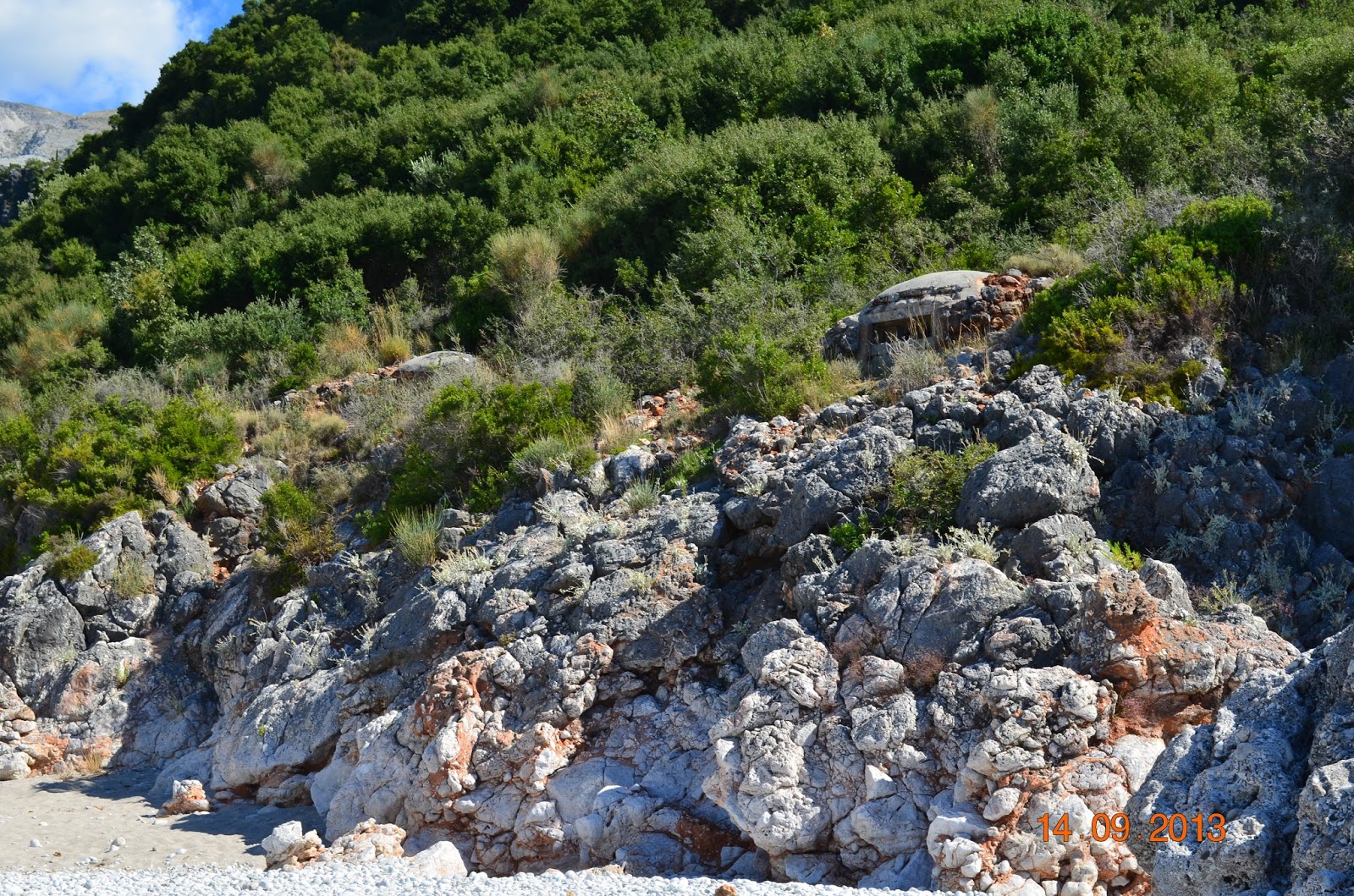
Blloku area. Once a guarded community open only to the Communist elite, the neighborhood is now a maze of streets filled with trendy shops, cafes and too many cars with not enough parking. And, this being Albania, we were shown a brightly colored bunker right across the street from the Parliament Building. By the end of the tour I realized that Tirana has so much more to offer than what you see on its dusty, loud, concrete surface.
 |
National Museum of History
|
The end of the week found me back playing tourist as I put on my "Attache spouse hat" and accompanied the wife of a distinguished military visitor on a tour of Albania's
National Museum of History. I have been driving past this stark Communist era building at the end of Skanderbeg Square since we arrived here last year but I had never ventured inside. With the help of two English speaking tour guides we were lead on a whirlwind tour through Albania's history from the ancient times to the present. Original religious icons and reconstructed mosaics shared display space with graphic photographs from the Communist era and an odd exhibit dedicated to the Albanian postal system.
My Albanian skills got a real workout as I tried to read the descriptions that accompanied each display. I was a college history major but I'm ashamed to admit how little I knew about the ancient history of this part of the world. I've studied the history of the lands that are now Italy, Greece, and Turkey but somewhere along the way I never realized that the land that is now Albania was at the heart of Illyrian, Byzantine, and Ottoman history. Always the occupied and never the occupying country, so many of Albania's historic treasures have been lost or destroyed forever. The museum screamed of it's Communist origins- stark, no nonsense architecture and cold interiors yet had the quirkiness that I find uniquely Albanian- ornate stairways that lacked handrails and other safety precautions and rooms that just weren't quite finished.
The small but well curated exhibits provided a nice explanation of Albania's rich past to both the first time visitor as well as those of us who have been here a bit longer. I love history and museums are usually the first places I visit when I am in a new place. I am surprised that it took me this long to actually visit the museum but now that I have, I know I will return. Next time, however, I'll go with my Albanian-English dictionary in hand.