

Showing posts with label Greece. Show all posts
Showing posts with label Greece. Show all posts
Wednesday, August 5, 2015


Wednesday, July 1, 2015

Saturday, June 21, 2014
A Greek Summer Night

I've mentioned before that I love all things Italian but Greece and Greek culture comes in a close second for me so I was excited at the prospect of attending a Greek cultural event right here in Belgium. Our house back in Norfolk, Virginia was less than a mile away from a Greek Orthodox Church that annually hosted one of the largest Greek festivals on the East Coast. Each year we would sit on the church lawn with friends and eat spanikopita, gyro and salads, drink too much red wine and listen to traditional music. The event was something we looked forward to each year. Last year in Albania we celebrated Greek National Day with the Greek Embassy at a concert and dance performance that highlighted the best of the traditional Greek arts scene. As a family we made two separate trips to Greece, first to the Ionian Islands surrounding Corfu and then to the monasteries of Meteora. Along the way we heard traditional music, took in the spectacular sights and dined on delicious Greek food. Much of it wasn't fancy but it was all delicious and left me wanting more. I returned from each trip and immediately took to the kitchen to try to replicate what I had eaten.
So yes, I was excited at the prospect of experiencing more of Greece and this celebration did not disappoint. It was truly a festive occasion as we joined Glenn's co-workers at a long table under the tent. Musicians performed a live performance in front of a large screen where images from across Greece were displayed. Sidney immediately recognized a few of the scenes from our own travels before being distracted by some of his classmates. And the food. Oh my goodness was it good. In fact, it was some of the best Greek food I have ever eaten. Even Sidney gobbled it down . It was so good that Glenn made a second trip through the long food line to secure us additional food. We probably ate too much but it was so nice to eat great food, listen to nice music (at a very respectable volume) and spend time with friends. In between bites of food Sidney danced along to the music and played with his classmates. This was such a family friendly event and this was evidenced by the number of families of all nationalities who were eating, dancing and celebrating. It was the perfect way to kick off the summer.
I am thankful that we are living in such a multi-cultural community. In recent weeks we've celebrated with the French, Spanish, Polish and now Greeks. I can't wait to see what the rest of this long (and hopefully sunny) summer holds in store for us.
Wednesday, September 11, 2013
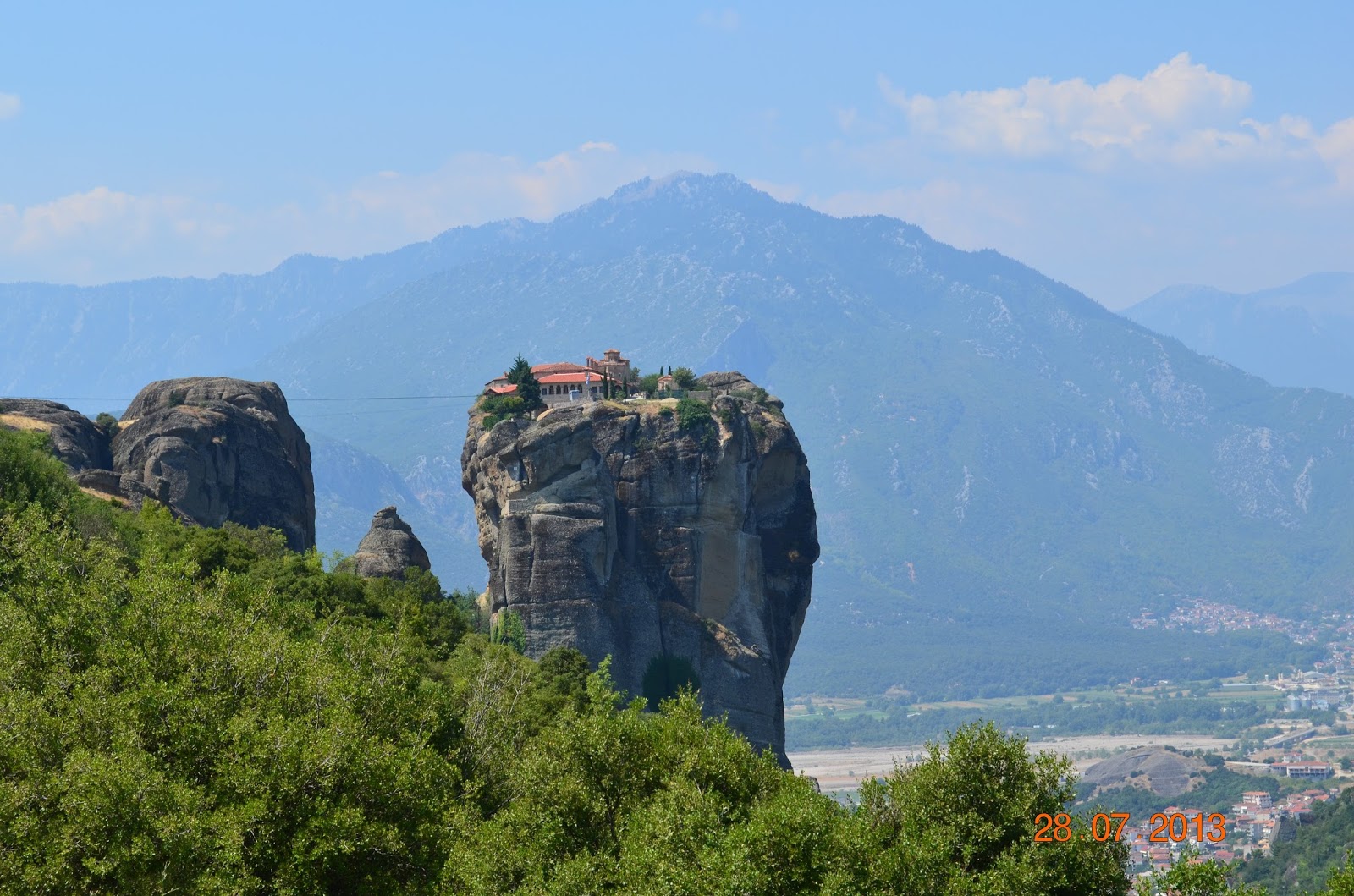
(Mostly) Wordless Wednesday: The Monasteries of Meteora
Because I'm still thinking about our trip to the Monasteries of Meteora, I need to share even more pictures:



Tuesday, August 20, 2013
A Balkan Recap
So how does one sum of 1600 plus (1,652.3 to be exact) miles through six countries over the course of fourteen days?
 |
| A Balkan overview |
Upon learning about our summer plans some people told us we were crazy while others were simply intrigued. (I mean, who goes to Bulgaria and Romania for their summer vacation?) I have to admit, I was thinking that we were a bit of both. Just by looking at the map I could tell that the trip would entail a lot of driving and I hoped our poor little Honda would be up for the challenge. And there weren't a lot of roads where we were going. Sure once we were out of Albania our Tom Tom was able to map out a route for us but we weren't so sure about it all. With a three and a half year old any road trip is always an iffy proposition; just how many hours is he willing to be strapped into a car seat before demanding to be set free? And I knew it would be hot. Very hot. After all, the residents of the places on our itinerary flee the area in July and August to escape the heat. So why were these crazy Americans actually going into the depths of the heat? For the adventure and to be able to say we did it. (And we are glad we did). So here's a recap of the highlights and commentary about the trip.
Greece:
- The monasteries of Meteora are amazing and if you ever have a chance to visit, do it. Yes it was hot but because of the heat it was "off season" for the area so we had much of the place to ourselves. It was breathtaking to take in the sweeping views from the mountain peaks and with an occasional breeze, the heat wasn't so bad. And at night I loved sitting on our hotel balcony and looking back up at the looming hills. I can completely understand why the monks settled here.
- We didn't love Thessaloniki. We wanted to but we just couldn't. With the exception of a few hidden gems and the fabulous view from our hotel room, we found the city to be dirty, graffiti covered, and down trodden. Venturing outside of Thessaloniki was better and afforded us the opportunity to explore ancient ruins and take in a waterfall or two.
- The vast area in between our two stops in Greece was flat, dry, and seemingly endless. We witnessed firsthand how the depressed economy has effected northern Greece. The bright spot along this stretch of road was the road itself. Maybe I have been in Albania too long but I found the road, or divided highway as it was in most places, to be well maintained. (Greeks love their signage as well. I quickly lost track of the number of signs we saw warning us of the presence of bears or cows). The main highway was obviously new and in places, still under construction. You just don't realize how important the quality road is to a place until you live in a place that doesn't have them!
Romania:
- We absolutely loved Bucharest. This up and coming city felt grungy yet hip. It appears that the city is slowly awakening from a dark past and being renovated without becoming completely gentrified. From churches and cafes to public parks and large scale apartment buildings, everything seemed to be under going a slow renovation. (I say slow since our Romanian friends say that they work just isn't being done fast enough). And Bucharest has plenty of true pedestrian only areas. I love being able to meander through these areas without the fear of being run down by speeding mopeds.
- You only have to walk down a Bucharest street or two to witness Romania's Communist past first hand. During Ceauseascu's reign, entire neighborhoods had been demolished leaving areas devoid of character yet so many of the churches dating to the Byzantine Empire had been left untouched. Combine this with architectural influences from both western Europe and the Ottoman Empire and Bucharest is nothing if not eclectic. All of this made for a interesting city where we never knew what we would discover around the corner.
Bulgaria:
- Who knew that Bulgaria is expected to produce 1.4 million tons of sunflowers in 2013 and 2014. I didn't and it wasn't until we spent hours driving through field after field of sunflowers that I began to understand the extent of Bulgaria's sunflower oil production. Bulgaria also produces corn and corn oil and we saw our share of these crops as well. Having driven a large portion of the country my impression of Bulgaria is that of a largely rural and agricultural nation. These rolling fields, mountains, and deep gorges were beautiful and my favorite part of Bulgaria.
- Customs and passport control in and out of Bulgaria is tough. We had our required visas but even (or perhaps) of our diplomatic passports and Albanian license plates border crossings were long and a bit tedious. Crossing from Greece into Bulgaria resulted in our (and Russian plated cars) being pulled over on the side of the road for close to a full hour as other cars zipped past. Crossing into Bulgaria from Romania was slightly easier.
- Signs of Bulgaria's Communist past were readily evident whenever we entered a city or urban area. Blocky concrete high rises ominously filled the skylines reminding me of how harsh living conditions had been for so many people. This was particularly evident in the city of Ruse which is located across the Danube River from Romania. Here kilometer after kilometer of depressing and dilapidated buildings lined the highway reminding me of many of America's public housing projects. The fact that they are still occupied by hundreds of families reminded me how poverty stricken this part of the world really is.
- We covered a lot of miles here but spent our time in two Bulgarian cities, the historic city of Veliko Tarnovo and the capitol city of Sofia. In between were hundreds of miles of narrow but paved roads and unexplained detours. (Well, maybe they were explained but in Cyrillic only). Veliko Tarnovo was hot and interesting but not my favorite stop along our journey. In many respects Sofia felt like a smaller version of Bucharest. It was both historic and modern. It may be because we ate better food there, but I just might have liked Sofia better.
Macedonia:
- Macedonia produced the biggest surprise of our entire vacation. Skopje proved to be a small vibrant city filled with a surprisingly high level of buildings and reconstruction going on. Not only is the city investing in new municipal buildings but the building boom includes a large number of monuments, statues, and fountains. Our brief Skopje stop was the perfect way to end our trip. So much so that we are trying to find a time to go back.
We then passed through Kosovo on our way back to Albania. We've been there before and in many respects the country feels like a slightly more developed version of Albania. We were greeted by Albanian flags at the Macedonian-Kosovo border where our passports received only the slightest glance by the Albanian speaking customs official. Crossing into Albania was even less stringent with a mere wave of the hand before we sped off. But we didn't go too far too fast; a herd of cows was standing in the middle of the divided highway. Yes, at this point we definitely knew we were back in Albania! (And unlike Greece, there were no signs warning us beforehand).
So this was our summer vacation. It was a far cry from our much more relaxing Scandinavian adventure of last year. This year we returned home weary and travel worn but so glad we had undertaken this endeavor. We saw places we had only heard about and experienced a culture that is so unlike what we are used to. From the Cyrillic language to the local cultures we were pushed outside of our comfort zone but for me, that is what travel is all about. So if you want clean and pristine, go to northern Europe; if edgy and up and coming is more your style, then come visit the Balkans. It won't always be easy or comfortable but it will be an adventure.
Monday, August 5, 2013
Digging Around In The Past
 |
| Pottery shards on display in the Pella Archaeological Museum |
Whenever I am in Greece I immediately conjure up memories of reading about mythology and ancient Greek history in my high school literature classes. At the time, sitting in an American high school, all of this seemed so foreign to me, yet today as we drive by brown historic markers identifying places I had only read about, it all begins to feel real. These places are so much more than a story on a dog-eared page; they were home to thousands of people who lived, worked, and eked out existences under often harsh conditions. And these weren't simple settlements, they were thriving metropolises whose architecture, infrastructure, and systematic layouts rivals today's much more modern urban centers. They thrived, faltered, and through the diligent work of archeologists and historians, many are being revived.
 |
| An ancient relic that has survived relatively intact |
 |
| Just a small portion of the excavated site at Pella; work was ongoing with other areas being excavated |
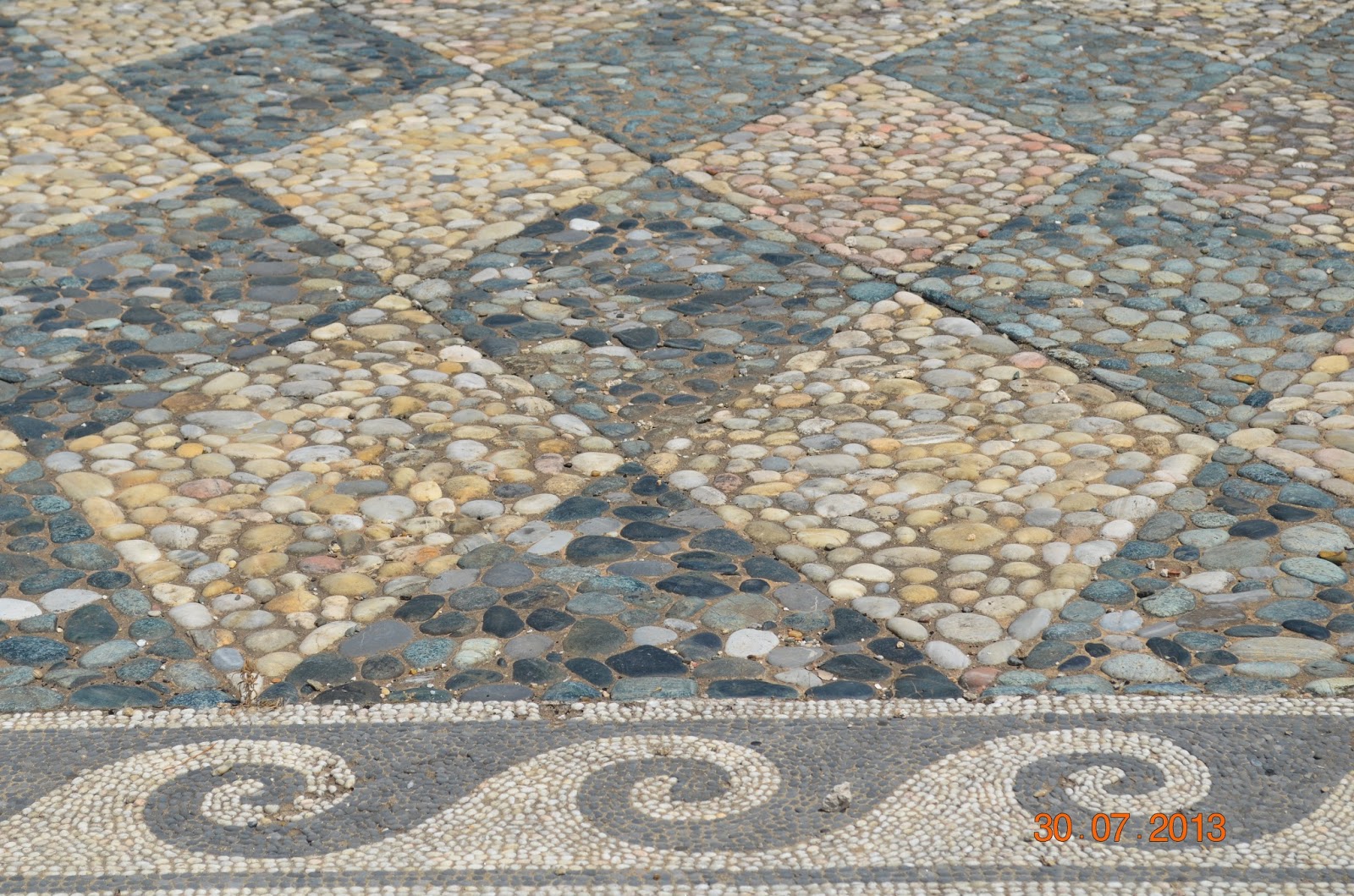 |
| A close up of the mosaic work; it amazes me to think that these tiny stones are intact having withstood time for centuries |
Saturday, August 3, 2013
The Other Greece In The Other Macedonia
 |
| Graffiti |
While the FYROM will be the last leg on our Balkan adventure we visited the Greek Macedonia early in our trip. We had returned to Greece again with the goal of exploring the central and eastern environs of the country. We clambered over the hills and monasteries in Meteora before setting out for Thessaloniki and the Aegean Sea in the east. I'm not sure what we were expecting to see along the way--perhaps the sun drenched coast and quaint fishing villages that beg tourists to visit. Instead, our drive took us through the flat and dusty plains of central Greece. The roads were mostly in good condition alternating between freshly rehabilitated and still under construction leaving us to rely on common sense rather than our GPS. The land was alternately rugged and somewhat fertile with farm tractors far outnumbering private vehicles. We drove through one small town after another with each looking more forlorn than the last. Greece's economy has been on a downward spiral for some time and this was so apparent as we drove through kilometer after kilometer of the countryside. Even in the middle of the week businesses appeared to be shuttered--with the exception being places selling farm equipment. We had lunch one day in the mountain village of Edessa where the highlight of our visit was their giant waterfalls. (Well, the highlight of Sidney's day was watching a graffiti covered train come through the station while we were eating lunch nearby). The waterfalls were a pleasant surprise but their beauty was marred by the obvious neglect that surrounded them. Grass and shrubs were overgrown and then there was the graffiti. Graffiti seems to be the national signage of Greece with everything from road signs and buildings to trees and even vehicles being covered with the colorful artwork (?), vandalism (?) symbols of free expression (?). There was just graffiti everywhere.
 |
| Standing under the waterfalls of Edessa |
 |
| Taking a break from exploring the Bey Hamam in Thessaloniki |
 |
| And yet more graffiti |
Thessaloniki is a city with a long history so we were excited to visit her most famous landmarks. Despite the intense July heat we dutifully set out to explore the area. The Bey Hamam didn't disappoint. Having visited a functioning hamam in Istanbul we knew what to expect and enjoyed following Sidney through one chamber after another exploring each nook and cranny. The Roman Agora in the heart of Thessaloniki was another surprise. It still amazes me that in this ancient part of the world one minute you can be in the midst of the hustle and bustle of the modern city and in the next you are standing in the middle of ancient ruins. Now that is cool. What wasn't so cool however; were the boarded up graffiti covered store fronts that circled the ruins. The juxtaposition between the preserved old and the neglected new was ironic. There were other sites we had hoped to visit but upon arriving at them we found them shuttered. (I don't think it was the day of the week we were visiting either because by the looks of the overgrown grass these sites hadn't been opened to the public for some time). What we did find were restaurants that were open for business and knew how to treat customers right. While none of them were full all were eager to serve us and staying away from fish, we were treated to some of the simplest but tastiest food we had eaten in a long time. It wasn't fancy but it was served with a smile and as Sidney said, "made his tummy happy". Now it really doesn't get much better than that.
 |
| A beautiful view of a not so clean bay |
 |
| Ancient ruins right in the middle of the city |
Tuesday, July 30, 2013
For Your Eyes Only: The Monasteries Of Meteora
 |
| The Roussanou Nunnery |
 |
| Long view |
 |
| Close up of the water (and weather) carved rocks |
 |
| Now this holds a lot of wine |
 |
| Dead monks |
On the next hill over, we visited the Varlaam Monastery which while smaller than the Megalo Meteoro, provided us with amazing views of where we had been. The visit to the Roussanou Nunnery required the steepest climb but the sweeping views made my initial fears worth it. (This entire day was a challenge to this height fearing traveler). While all of the monasteries were well kept, the grounds of the nunnery seemed more immaculate. The building itself felt more compact and we didn't see any evidence of wine making on the premise. Whereas the entrances to the monasteries had been manned by slovenly looking young men, nuns were at work in the nunnery collecting admission fees and monitoring the attire of visitors. (Women are required to wear skirts inside all of the monasteries and those who weren't already wearing them were provided with scarves that could be transformed into hastily made wraps. Men were supposed to be wearing long pants and as Glenn suffered through the intense heat in his we saw many men entering these holy places with knobbly knees showing). We also witnessed nuns sitting in corners of the nunnery silently making handcrafts.
All of the Meteora Monasteries were impressive but what I found the most awe inspiring was the physical location of each holy place. Perched upon the top of these hills, I continued to wonder about the effort and sheer willpower that constructing each of these buildings must have entailed. Which option was better- trekking goods up the hill or hoisting them in a basket? I couldn't decide which view was the most impressive: the top of the hills looking down provided one perspective but sitting at the bottom looking up was equally awe inspiring. The sweeping view from our hotel room balcony provided yet another perspective. I enjoyed all of the views. Everyone says that the best time to visit the area is in the winter when the hills and monasteries are snow covered. Now if only we can schedule a return visit to see if we agree.
 |
| Meteora is in the middle; the Pindos Range is in the background |
 |
| The morning view of the mountains as seen from our hotel room |
 |
| Night time perspective |
Wednesday, July 17, 2013
Island Hopping In The Ionian
 |
| A waterfront church |
 |
| Inside a cave looking out |
 |
| Exploring the coast |
Pulling out of Lakka we hugged Paxi's rocky shoreline and explored the numerous sea caves that dotted the shore. The sheer cliffs plummeted down to water that was so crystal clear that I could look through meter upon meter of the aquamarine liquid all the way to the sea bottom. The sight really left me breathless. To me, the color and clarity of the water rivaled that of the Caribbean. Our boat was small and the very able captain was able to pilot us through the narrow caverns of numerous caves. I thought this was just so cool. The water was just as clear here and its reflection off of the cave walls created a spectrum of blues, greens, and purples. Inside one cave the more adventurous amongst our group had the opportunity to go swimming. Glenn jumped right in and this ended up being the highlight of his day. He also swam to shore, returning with a pocket full of pebbles for Sidney, whose throwing them into the water and watching them sink ended up being the highlight of his day. We explored a few more caves before heading out across the narrow waterway to our next stop, the island of Antipaxi.
On Antipaxi we disembarked and spent several hours playing in the azure water and lazing on the small beach. Sidney's initial dismay that there weren't any rocks to thrown turned to delight when he discovered that sand is even more fun to play with. This island is tiny and with roughly 60 or so summer residents, sparsely populated. Our little beach was anchored by two ramshackle restaurants serving freshly grilled fish and meat. The entire vibe was low key and relaxed. The water was refreshingly cold but the sun was hot and we staked out our beach chairs and just relaxed. The beach was a fine white sand and not marred by a single piece of litter. (You know I have been in Albania too long when a lack of litter and debris is the very first thing I notice about a beach). I'm not even a "beach" person but I felt like I had discovered a little piece of heaven and loved every minute of our time there. So much so that I even donned a bathing suit for the first time in years and actually went in the water. And I enjoyed it.
 |
| Lunch time view- Antipaxi Island |
 |
| Waiting for lunch to be delivered |
 |
| One last look- Antipaxi |
Of course, all good things must come to an end and all too soon it was time to hop back on our boat and return to Corfu. We took our time returning however, stopping to explore a few more caves and taking an afternoon coffee break in Gaios. Lulled by the rocking of the boat and tired by all of the sun I think everyone napped during the return trip. I know I did. The day was just the type of relaxing and fun filled one that you should have on vacation. As I mentioned earlier, it was the 4th of July and while we didn't experience the traditional American style cookout and fireworks displays, we didn't miss any of it.
 |
| This was how clear the water was |
 |
| Paxi |
Monday, July 8, 2013
So Close Yet A World Away: Discovering Corfu
 |
| Monastery bells |
This northern most Greek island in the Ionian Sea is just 18 miles from the shore of the southern Albanian city of Sarande, but being there felt like it was a world away from our temporary home. Whereas Albania feels arid and brown Corfu is incredibly lush and green. Locals complained about the condition of the roads and infrastructure but from what we saw, it is light years ahead of those in Albania. Greece may be in the midst of an economic crisis but we saw little evidence of this as we mingled amongst other throngs of tourists. Multi-million dollar yachts floated in aquamarine coves, shops were bustling, and it felt as though the entire island was open for business. In fact, this island's economy is heavily driven by tourism and from the restaurants and shops to historic sites, everyone we encountered was warm, welcoming, and hospitable. Since Corfu is in the heart of the Mediterranean I was already familiar with the meats, cheeses, vegetables, and olives for which the region is famous. What I didn't know was that Corfu is most well known for her hundreds of thousands of olive trees that cover most of the island. In addition to the cured olives and olive oil that we readily sampled, olive wood products were readily available for purchase. (And yes, we also brought home a few of these beautifully marbled souvenirs).
 |
| Monastery entryway |
So what did we do while there; we played tourist of course! Under the knowledgable expertise of a local tour guide we toured the UNESCO designated Old Fortress of Corfu Town and meandered through the maze of streets in the city's pedestrian zone. We explored monasteries dating back to the 1200s, toured the Achillion Palace which was once home to Elizabeth, the Empress of Austria and Queen of Hungary, frolicked in the crystal waters off of Paleokastrisa, and took in the sweeping views from the top of some of Corfu's highest peaks. (We also spent an amazing day island hopping between Corfu and neighboring islands but that is a post for another day). We enjoyed long leisurely meals of local specialties overlooking the ocean and discovered some really good Greek wines. And as is the case with any good get-away, we also had plenty of time on our own to explore the island or to do absolutely nothing. Sidney loved wandering through the pedestrian friendly streets of the old city, wading along the beach and throwing rocks into the water, and watching airplanes take off and land from the nearby airport. As adults we enjoyed all of this too but more so, we loved unplugging (we only had the weakest of interest signals in our room), relaxing, and just enjoying the atmosphere. In fact, one of our favorite evenings of the week involved a local bottle of wine and dinner from room service eaten on our ocean front balcony. It really doesn't get much better than this.
Because pictures say it better than words can, here is a sampling of the amazing sights we saw:
 |
| Aquamarine water |
 |
| Paleokastritsa |
 |
| The sculpture garden at the Achillion Museum |
 |
| Everything was made of olive wood at this shop in the center of old Corfu Town |
 |
| An old motorcycle waiting for its rider to return outside of the walls to the Old Fortress |
 |
| Crossing into the Old Fortress |
Wednesday, March 27, 2013
My Big Fat Greek National Day
 Monday was Greek National Day and here in Tirana, the Greek Embassy went all out with their celebrations. Recognizing the 1832 establishment of Greece as an independent and free state, the day's festivities included a performance by the Dora Stratou Dance Theater highlighting the traditional dances and music from Greece's diverse regions. Greece is a relatively small country with just under 132,000 square kilometers but is much more diverse than the stereotypical western images that Mamma Mia! and My Big Fat Greek Wedding bring to mind. From its kilometers of aquamarine shoreline and sun filled islands to the ruins of ancient Athens and its mountainous northern border shared with Albania, there is a diversity amongst Greece's geography, culture, and people and all of this was reflected in the evening's entertainment.
The vibrant costumes, the varied dances, and the music were impressive. The program included traditional music and dances from all of Greece's regions. From the northern area of Macedonia (not to be confused with the Former Yugoslav Republic of Macedonia) to the Ionian Islands and Epirus and everywhere in between, each region was represented. The costumes and dance of the Macedonian region reminded me of the traditional songs and dance of southern Albania; this shouldn't be surprising since the two areas share a mountainous border. These dancers wore bold black and red costumes while the dances representing the Ionian Islands were equally vibrant but more colorful and varied. The music and dance steps from this region were lighter and far more elegant than their interior cousins. The costumes accompanying the dances representing the Northern Thrace and Asia Minor regions were less ornate but reflective of the influences from neighboring Turkey and Bulgaria.
The performance was just the first part of the evening. Following the concert guests were invited to partake in a reception in the lobby of the National Opera House. Upon hearing this I had visions of spanikopita, baklava, olives, and other Greek delicacies. This thought kept me going through the long, cold (there really wasn't adequate heat in the theater) interludes between performances that allowed for costume changes. But because this is Albania, while there was Greek wine, there wasn't any Greek food to be had at the reception. Instead, the food was your typical Albanian reception food providing an array of Albanian and Chinese (??) appetizers that were washed down with either Greek wine or Heineken beer. The wine was decent, the food not so much. This didn't stop other guests from heaping their plates with so appetizers that I wondered whether they had eaten that day. All of this was accompanied by the unappetizing aroma of cigarette smoke. Yes, people were actively smoking inside the lobby of the National Opera but in a strange way, I've come to expect this type of behavior.
So unless I make it myself, my hankering for authentic Greek food will have to wait until our two upcoming trips to Greece. First up will be the Ionian island of Corfu in early July followed by a road trip through northern Greece at the end of the month. It is still a few months away but I can already hear the music and taste the food. I can't wait.

Monday, December 5, 2011
Sometimes You Just Need to Get Away
That’s how I felt following the craziness that was our Thanksgiving week. In looking at our schedules I realized that we actually had a “free” weekend before the Christmas rush began. Instead of staying home we decided a quick weekend get away to Greece was in order. (Actually, I decided that I needed to stock up on a few items from IKEA and the Ioannina, Greece store was the closest and easiest one to get to).
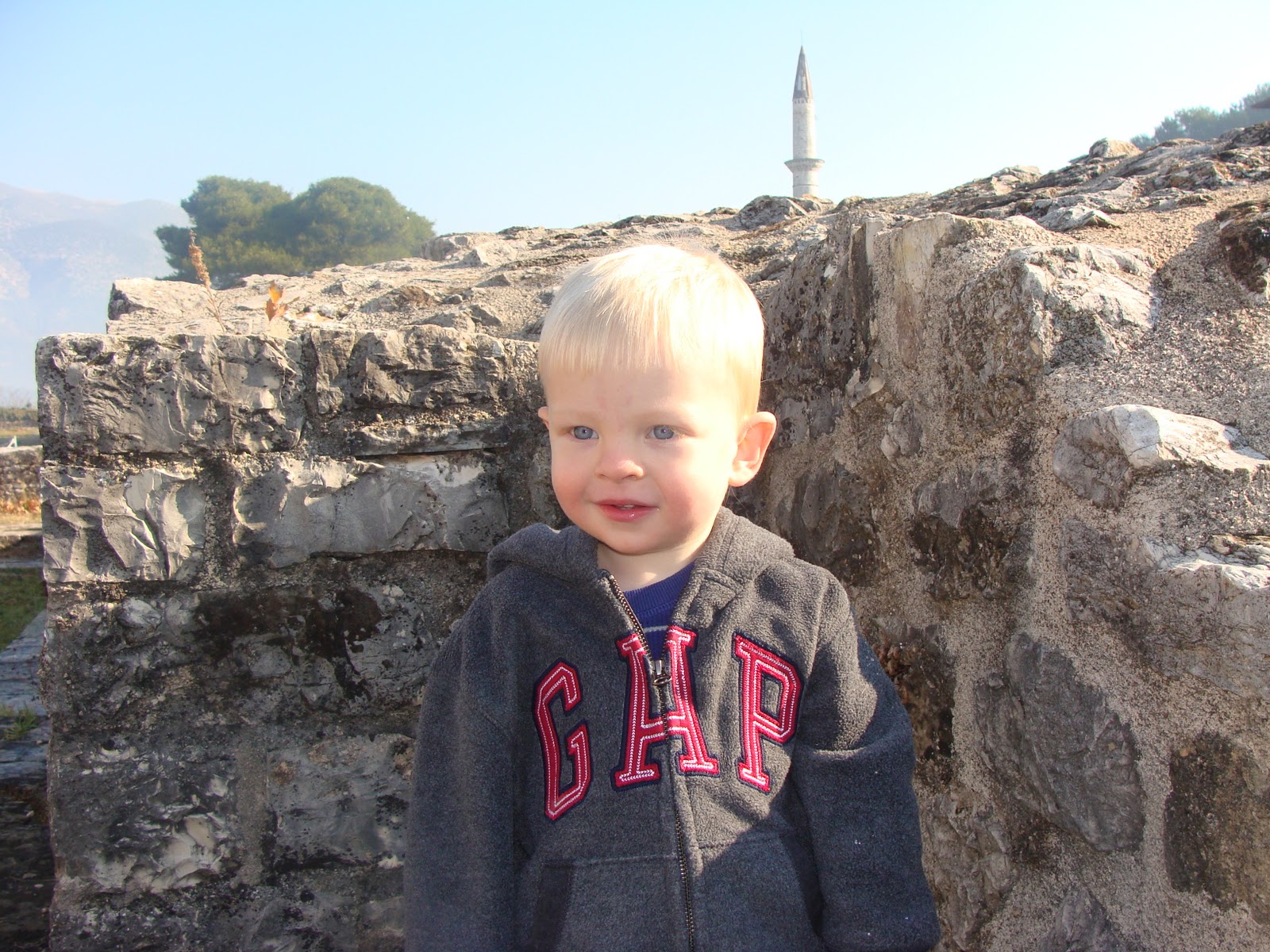
We spent Saturday exploring Ioannina’s walled Citadel, shopping at IKEA, and just spending time as a family. It was exactly what I needed to recharge my batteries. Despite the economic crisis plaguing Greece, we saw little evidence of the country’s problems. Families were out and about in the city and money was being spent. We have been enjoying our time in Albania but we also relished the fact that the streets were free of litter, traffic laws were obeyed and we had “western” amenities at our disposal. There are so many things that you take for granted until they aren't readily available.
Our homeward trek took us up the Ionian Coast through Saranda, Himare, and Vlore. Quaint seaside villages hugged the craggy mountains. Herds of sheep and goats grazed on the hills- and occasionally crossed our path. The road was surprisingly well maintained but the hairpin turns and switchbacks made it slow going. We stopped in Porto Palermo to visit Palermo Castle. This well preserved castle sat on a beautiful isthmus sporting views of both Corfu to the south and the Bay of Palermo to the north. We spent time exploring cavernous rooms and dark nooks that seemed like they belonged in a Nancy Drew mystery. I think this castle has to be one of the best kept secrets in Albania.
 By the time we arrived back in Tirana we were all simultaneously tired and rejuvenated. We covered a lot of area in three short days and listened to more Christmas music than is healthy but it was worth it. As much as I’m loving our life in Tirana it can get quite exhausting. These quick get aways are just the solution. So much so, that I’m planning our next one now.
Having left the hotel details up to Glenn, we piled into the car on Friday afternoon and headed south on a “new and improved” Albanian highway. The weekend was a whirlwind but one of the highlights was our hotel (Grand Serai Congress & Spa )complete with a balconied suite, an unlimited supply of hot water with amazing water pressure in the shower, and a buffet filled with baklava and cheeses from all over Europe (no Albanian white cheese for me this weekend!). Christmas decorations and music filled the lobby and helped me get into the holiday spirit.
 |
| Exploring the ruins |
Sunday we meandered our way back towards Tirana taking a slightly different route. The topography of northern Greece is almost identical to that of southern Albania (after all, they do share a border and the actual border had been disputed for years) but it was immediately noticeable when we had left one country and entered into another (and I’m not just talking about having passed through Customs). The roads on the Albanian side of the border were noticeably narrower and littered with trash. Rows of old bunkers lined the hillsides with their observation holes pointed south towards Greece. Policia Rruga (traffic police) were randomly (or so it seemed) pulling cars over and questioning the drivers. Yes, we were definitely back in Albania and on our way home.
 |
| Yielding to the locals |

Subscribe to:
Posts (Atom)