

Showing posts with label Poland. Show all posts
Showing posts with label Poland. Show all posts
Wednesday, January 21, 2015


Thursday, May 22, 2014
Celebrating Poland
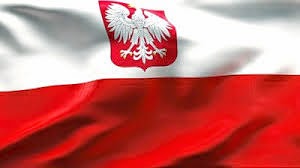
One of the wonderful things about our current posting in Belgium is the diverse international community that we are now a part of. With twenty-eight NATO countries and a handful of other partners being represented in our little community, there is always a cultural event taking place. We attend the ones we can and make note of the others for planning next year's activities. And much to my delight, the most recent cultural event we attended was the celebration of Poland's constitution.
Poland's constitution was adopted on May 3, 1791 making it it oldest democratic constitution in Europe and only second in the world to the United States. But just because Poland had a constitution didn't mean it was smooth going for the country. If anything, over the course of the next two centuries her politics proved to be anything but easy. The country and her people endured uprisings, occupations, the reign of Nazi terror, and decades of Communism rule before the revolution of 1989 finally brought about democracy. But through it all Poles persevered. It is no wonder that the country takes such pride in their heritage and that pride was on display last night.
Although Polish Constitution Day is actually on the 3rd of May, on SHAPE it was celebrated last night. And to celebrate, we attended an impressive concert and cultural performance by the Representative Artistic Ensemble of the Polish Army that incorporated music, dancing, and a history lesson with contemporary Polish music. Singers and dancers moved us along the path of Poland's history from the adoption of the constitution through the turbulent years of World War Two. Although I didn't understand most of the words (they were in Polish after all), the meaning and emotions were clear. Because Sidney often has ants in his pants and can't sit still, this was the first sit down concert we brought him to. Sure he wiggled around a bit but he also tapped his fingers and toes to the beat of the music and oohed and ahed at the brightly colored costumes. As he said, the pretty lady was wearing a red dress and the singers (a.k.a. soldiers) had swords. What more does a four year old boy need?
And his Mamma? More than ever, she just wants a return visit to Poland. Soon......
 |
| One of the many dances |
Wednesday, October 2, 2013
(Mostly) Wordless Wednesday: Krakow After Dark
 |
| St. Mary's Basilica |
 |
| Flower market at night |
 |
| Churches |
 |
| Muzeum Historyczne miasta Krakowa |
 |
| The old Cloth Market building in the center of Rynek Glowny |
 |
| Night lights (with water) |
 |
| Juliusz Stowacki Theater |
Monday, September 30, 2013
The Salt Mines Of Wieliczka
 |
| "Cauliflower" salt formations |
Fortunately the day of our visit was after the summer rush so while busy, the crowds were quite manageable. And of course, since the tours are offered so frequently, the knowledgeable guides have the whole routine down to a science. We had been warned that because we would be doing a lot of walking and the mines are underground, the temperatures would be quite cool so we should wear comfortable shoes and dress warmly. While cool, the temperatures were quite comfortable but everyone was right about the walking. We descended a total of 800 steps down into the salty ground. We encountered the first 350 of those immediately upon beginning our tour when our group twisted and turned our way down a series of 57 separate sets of stairs and platforms into the ground below. These steps weren't just any steps either; they were incredibly steep. It felt like a race into the center of the earth as we followed our guide into the cool unknown. And the stairs were only a part of the adventure. Our guide claimed that the total distance we would cover was just under 2 kilometers but it felt like so much more.
What we found at the first "level" was impressive. We encountered tunnel after salt encrusted tunnel meandering through the dimly lit underground. This is not a place for the claustrophobic as the ceilings were low and some passageways tight. Our guide warned us to stay together and I could see how one could easily get lost if they didn't keep up since each tunnel looked much like the last one. The tunnels were impressive and I could only imagine how dark and scary they must have been to the miners who toiled away in them. These tunnels would periodically open into caverns of various sizes ranging from small nooks to large rooms with soaring ceilings. Scenes portraying mining life, carved of salt of course, filled many of caverns. From whimsical gnomes to hardworking miners and statues of prominent Poles, they were all found in this underground world. We also encountered several underground streams and ponds whose water was a whopping 35% salinity. Now that is salty! I quickly came to realize that all salt is not the same. We saw white crystals called "cauliflower" salt due to their resemblance to the garden vegetable and we saw shiny and smooth black salt walls. Other salt was the color of concrete while some of the floors were made of pink toned compressed salt tiles. Running my hand along a tunnel wall left my fingers a tonge tingling salty. It was all so surreal.
But pictures say it best. Who knew that all of this is located right underneath a bustling Polish community?
 |
| Just a small portion of the underground tunnels |
 |
| Recreation of a wedding proposal, cast in salt of course |
 |
| 35% saline; now that's salty! |
 |
| Holy Cross Chapel |
 |
| The Polish Pope |
Saturday, September 28, 2013
Kocham Krakow
 |
| A local character |
Krakow's Old Town is ringed by green space with grassy areas and old trees sharing space with pedestrians. The crisp autumn air made it especially inviting to walk around the oldest part of the city. And the Old Town itself is centered around the impressive main market square was truly old whereas Warsaw's, having been decimated during World War II, was painstakingly rebuilt. Flower vendors, horse drawn carriages, and musicians shared the square with the hundreds of pigeons and the hoards of tourists that I have come to expect when visiting European cities. Restaurants and cafes filled the perimeter of the square with their outdoor tables, complete with heaters and blankets to ward off the fall chill, inviting people to stop and sit. And we did, on numerous occasions, enjoying traditional Polish foods and warming beverages as we people watched. People watching and absorbing the atmosphere is always my favorite part of any vacation and Krakow proved to be no exception. There was just so much to see here that it made it difficult to leave the heart of Old Town but when we did, we were further rewarded for our efforts.
 |
| The main square at night |
 |
| And a bird's eye view |
 |
| The grounds of the Wawel Castle |
And then there were all of the other things that makes Krakow so special. From the street musicians, traditional crafts, and of course the food, I loved it all. Our best discovery by far was a street festival filled with traditional foods and crafts. The pierogi, kapusta and kielbasa we ate washed down with Zywiec beer reminded me of my grandmother's cooking. Add in the polka music that caused feet to automatically start tapping and it felt as though we were in the midst of a Polish version of Oktober-fest. Although this was my first trip to Poland so many of the sounds and smells were flashbacks to my childhood. I felt like I was home.
 |
| Local pottery- famous the world over |
Thursday, September 26, 2013
The Art of Wycinanki
 Wycinanki is the art of Polish paper cutting. Dating back to the mid 1800s, this form of folk art is thought to have originated with shepherds who cut ornate designs out of pieces of bark. Over time the art evolved into a craft performed mostly by women who used paper to create decorative arts for their homes and churches. Designs vary by region and often reflect natural themes. These designs can be simple or ornate and often include animals, birds, and flowers, all ordinary sights in every day life. This artwork has transformed from folk lore into something trendy with Wycinanki inspired designs showing up on handbags, wall hangings, and fashion runways around the world. Today this folk art is thoroughly modern. Fancy and colorful papers are just as apt to be used are the basic black or white sheets of years gone by and while shepherds used sheep sheers to cut their designs, modern artists use small pairs of scissors. Some things definitely have changed but the ideas remain the same.
I was lucky enough to be able to participate in a paper cutting workshop while in Warsaw. The workshop was facilitated by Susan Throckmorton, a Mount Holyoke alumnae and Warsaw resident who is a member of the American Guild of Paper Cutters. Susan's work (examples are shown above and below) is truly impressive. From black and white designs to multicolored birds and medallions, the intricate details are incredible. It amazes me that with a few (or several) snips of the scissors, amazing artwork appears.
 |
| Demonstration of a finished black & white design |
 |
| Birds- a common theme |
 |
| A collection of smaller designs |
 |
| A black and white forest scene |
Now I have never been what I consider to be artistic, but I entered this workshop with the naive idea that I could produce something impressive. Perhaps it was the "type A" in me but I thought this was possible. But this is what I ended up with:
 |
| And my first attempt; it is basic but symmetrical so I can't complain |
It wasn't nearly as pretty as I had envisioned but I didn't cut through the stem the way some other people did and my birds, those tricky symbols that either make or break the finished product, while not ornate, were symmetrical. It wasn't good but it wasn't bad. True to form, however, I'm thinking about how I can improve on this with my next project. I've even bought the correct paper and scissors to make it happen. Stay tuned!
Monday, September 23, 2013
Warsaw Re-Rising
 |
| Old Town Square today |
So how does a city that was essentially completely destroyed recover? In Warsaw's case, it was done brick by brick. Seriously. After the War surviving residents returned to their city determined to rebuild what was left of the place they once called home. The Communist influence of the Cold War saw concrete buildings being erected to address the dire shortage of of housing but before that, in the area where Warsaw's Old Town once stood, a new "Old Town" was rebuilt. Over the course of five years, bricks were brought in from other parts of the country and ever so slowly the Old Town returned to its former glory. Brick by brick. No detail was too small as marketplaces, churches, and palaces were rebuilt in the same design as the ones that had been destroyed. It took time and some details took decades to complete but it was (and is still being) built. Ornate architectural details and even original colors and patterns were carefully replicated. Although it wasn't without controversy since the Old Town was in fact new, in 1980 Warsaw's reconstructed Old Town was designated as a UNESCO World Heritage site and today is a proud symbol of Warsaw's rebirth.
 |
| A local musician |
While the city feels vibrant, modern, and moving forward--glass sky scrapers dominate much of the skyline-- there is a feeling of sadness about Warsaw that I just could not shake. Maybe it is because I've learned such horrifying details about her past or that the past is really a part of Warsaw's moving forward. Regardless of its cause, it doesn't appear that Warsaw is hiding or ashamed of her history. This is evidenced by even the darkest parts of Warsaw's history being on display in the form of picture filled outdoor museums for all visitors to see. It is as if Warsaw is proudly showing off how far they have come in their reconstruction. And yes, while I know that the "old" parts of the city really aren't old in the true European sense of the word, at least on the surface they look like they have been there for centuries. And this ongoing reconstruction of the city is just the latest chapter in her history. Perhaps I do need to follow the advice of the locals and return in a year to see what has transpired. It could be exactly the same or it could be totally different.
*** For a brief but thought provoking look at Warsaw's destruction and subsequent reconstruction, check out Mark Krawczynski's film Out of the Ashes: The Reconstruction of Warsaw's Old Town After World War II.
(Mostly) Wordless Wednesday: The Destruction Of Warsaw
 |
| A walk through Warsaw's history- today |
 |
| The Warsaw-Vienna Railway Station - 1939 |
 |
| Powwow session for the Germany army; the diplomatic corps left Warsaw around this time - 1939 |
 |
| German soldiers talking with Polish police officers - 1939 |
 |
| The winner's parade with Hitler observing - 1939 |
 |
| Map depicting sites destroyed by Soviet air raids - 1941 |
 |
| Outline of the Warsaw Ghetto area- 98% of the 380,000 Jews in the Ghetto were exterminated by May 1943 |
 |
| Ariel showing the destruction of the city - 1944 |
 |
| A city in ruins 1944 |
Friday, September 20, 2013
Returning To The Motherland

And then there is the fact that this year's symposium is in Warsaw. Poland is the country of my father's parents and my earliest memories involve my grandmother gossiping in Polish with her siblings, speaking fondly of the old Polish neighborhood in Cambridge, Massachusetts (her parents immigrated to America shortly before her birth), and of course the delicious Polish food she would laboriously cook. As a typical second generation immigrant my father eschewed his cultural heritage and thus, during my younger years I did the same. Growing up in a solidly "American" community where it seemed as though every one's families had lived there for generations, I often felt like the odd person out with my ethnic sounding name and lack of local roots. It college it was different and it was there that I started thinking about my own history. (Again, thank you Mount Holyoke). As I've grown older I've become increasingly intrigued about the land my ancestors called home and had been wanting to visit for some time. And this weekend my wish became a reality.
So in many respects, this weekend is a dream come true. I've been sharing in interesting conversations with worldly women, swapping college memories that transcend class years, admitting that despite my very Polish name I don't speak a word of the language, and yes, explaining what the heck I am doing living in Albania. I've also been eating real Polish pierogi, wandering the streets of Warsaw's Old Town, and thinking about my own family's story. I'm ashamed to admit that I don't know as much about it as I should but I'm now determined to do something about that. And while that wasn't the point of this Mount Holyoke symposium, just being in the presence of all my fellow alumnae has inspired me to do some research and to expand my own horizons by learning a little more about my family story. Thank you Mount Holyoke; the education you gave me just keeps on giving.
Subscribe to:
Posts (Atom)